

Cats love to roam and explore. It’s in their nature. So, no matter how hard you try, there will always be the risk that they may struggle to find their way home.
This is one of the reasons why cat microchipping is to be made mandatory in England from 10th June 2024. The chip will need to be implanted before the cat reaches 20 weeks old, with the owners details stored in a database that must be kept up to date.
Here at St Kitts, we see countless numbers of cats brought in through our doors every year, with many unchipped, which makes it incredibly difficult to get them back home.
The new law will go towards making huge strides in improving animal welfare, and will help to reunite much-loved family cats with their rightful owners. It will also protect them from the unfortunate risk of theft.
Microchipping is a quick procedure that causes minimal discomfort. It’s quite similar to your cat receiving their usual vaccinations.
It involves inserting a microchip, about the size of a grain of rice, under the skin between your cat’s shoulder blades. Once in place, they won’t feel it, and it won’t need to be replaced.
The microchip has a unique serial number that you need to register, along with your details, on the pet microchipping database. When a cat is found, the microchip can be read with a scanner and the registered keeper will be identified, so you can be quickly reunited with your pet.
If you move home or your contact details change, it’s important that your cat’s microchip is updated. To do this, you simply need to contact the database where your pet is registered to make any necessary changes. This can usually be done online or over the phone.
If you’re unsure which database your pet is registered with, bring them in to your local practice and our team will be able to scan them to get the details for you.
Owners who are found not to have microchipped their cat by 10th June 2024 will have 21 days to have one implanted, or may face a fine of up to £500.
Microchipping is not compulsory for free living cats that live with little or no human interaction or dependency, such as farm, feral or community cats.
Our Pet Healthcare Plans are designed to save you money by spreading the cost of routine and preventative treatments with low monthly payments. This includes a FREE microchip (if required), as well as lots of other benefits, including:
And much more!
*Tick control included with Plus Plans only.
If you would like more specific advice about microchipping your cat, contact your local St Kitts practice:
St Kitts Vets Hartley Wintney: 01252 844044
St Kitts Vets Basingstoke: 01256 844944
Crookham Park Veterinary Centre: 01252 913990
Firgrove Veterinary Centre: 01252 877799
Pufulete, an adorable 6-year-old Ragdoll, was brought in to see vet Kristina where X-rays identified a short oblique fracture to his left hindlimb. The fracture of the tibia and fibula was further complicated by displacement (where the bone breaks in two and moves out of alignment), which had caused shortening of his leg.
After consulting with Pufulete’s owner on the best course of action, his implant was ordered and he was booked in for his op the following week. Vet Kristina carried out the repair procedure at our Firgrove practice, where she placed a minimal contact compression locking plate with cortical screws to help reduce the fracture.
Pufulete was back walking on the leg later that same day, and was able to go home with pain relief.
A few days after the op, Pufulete was back to see Kristina after injuring himself. Fortunately, as it was only a small wound, it could be treated with antibiotics and managed by his owner from home.
During his post-op checks at 5 and 7 weeks, we were delighted to see he was recovering brilliantly. He already had about 80% use of his leg at 5 weeks, with our 7 week X-rays showing the fracture healing nicely.


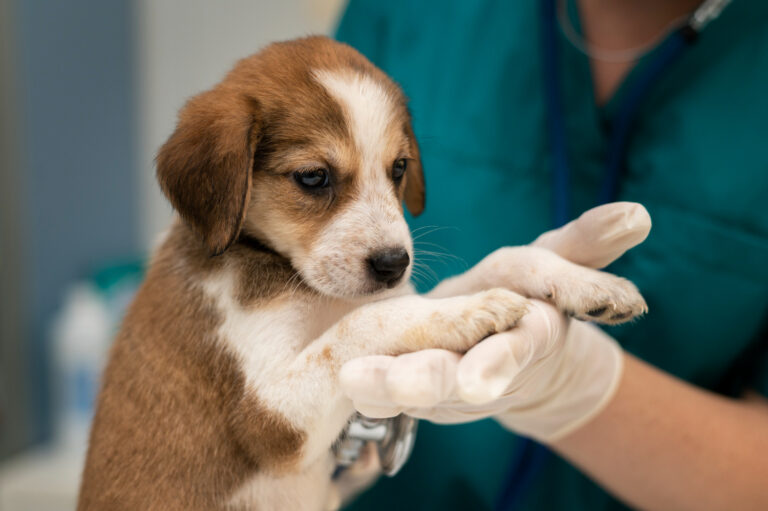
For some pets (and their owners), a trip to the vet can be daunting; conjuring up a mixture of emotions, from feeling anxious and nervous, to stressed. But it doesn’t have to be that way!
In this blog, we’ve put together some top tips to ease your pet’s anxiety, so your next trip is as calm and stress-free as possible:
A good place to start is getting your pet used to being handled, so it doesn’t come as a shock at their appointment.
It’s worth performing mock examinations at home, inspecting their paws, teeth and ears on a daily basis. As well as touching their legs, head, chest and lifting their tail. Giving them a massage and lots of positive reinforcement can help to make it an enjoyable experience.
Once your pet is comfortable with you handling them, ask family members or friends to do the same, to help them get used to different people.
If you’ll be using a crate to transport your pet to the vets, start introducing them to it early on to minimise any anxiety.
Leave the crate in a safe place, like your living room or bedroom, with the door open and toys or treats inside, so your pet can enter the crate freely.
It may take days or weeks until they are comfortable and confident to enter willingly. Make sure it is a positive experience, so don’t force them into the crate, or leave it until the day of the vet’s visit.
Try to take your pet out in the car to visit different locations, so they don’t just associate getting in the car with a trip to the vets.
To make the trip to the vets easier, it’s beneficial to familiarise your pet with the setting – from the smells, to the experience of being with other animals and staff. A good way to do this is to attend regularly for non-invasive, routine check-ups, like getting your pet weighed. You can even ask your local St Kitts practice if you can pop in to get your pet used to the environment, when it’s not too busy.
If your pet is particularly anxious and it worsens around other animals or humans, it’s a good idea to try and book your appointment for a quieter time of day. It will also mean less waiting time, which will help to reduce stress levels.
It’s good to come armed with plenty of your pet’s favourite treats to reward calm behaviour. This positive reinforcement works best after they’ve had their checks and treatments, but can be given for entering the crate willingly, being well-behaved on the journey and waiting nicely, to help alleviate any stress from the situation.
Your pet can pick up on any anxious behaviour, so keeping your body language and voice calm will help to reassure your pet.
Try to avoid stressful situations too; leaving plenty of time to get to your appointment is a simple way to reduce stress on the day.
Packing a toy, their usual blanket or bed, will provide a familiar smell of home, which can be soothing for your pet, especially if they are having a longer stay.
Bringing your pet’s favourite toy can help to distract them during the appointment, especially if they are having a procedure done, like a temperature check.
If your pet finds being at the vets stressful, turn it into a positive experience by taking them outside to play and have fun together – just ask to be called when it’s your turn.
Having distance from other anxious animals will help to keep your pet calm, so instead of waiting inside for your pet’s prescription or medication, head outside to play again and keep the experience positive.
You can book an appointment online for your local St Kitts practice or, alternatively, give one of our branches a call to speak with the team.
St Kitts Veterinary Centre: 01252 844044
Basingstoke Veterinary Centre: 01256 844944
Crookham Park Veterinary Centre: 01252 913990
Firgrove Veterinary Centre: 01252 877799

Although firework displays can be enjoyable for us, the unexpected loud bangs and flashes of light can be very scary for our pets.
With events such as Diwali and Guy Fawkes Night just around the corner, we’ve put together some of the best ways to help prepare your pet for fireworks.
This can be done long before firework night. Simply transform a quiet area of your home into a safe place for your pet to retreat into and feel in control. Fill it with their favourite toys, so your pet associates it with positive experiences.
This area should bring them comfort when they are feeling anxious or scared, and should be left accessible to your pet even when you are not at home.
Cats may prefer to hide under furniture or in a quiet corner. It’s important not to try and coax them out, as this will add to their stress, just leave them feeling safe in a secure place.
Smaller animals will benefit from having lots of extra bedding so they can burrow down.
It’s estimated 45% of dogs in the UK show signs of fear when they hear fireworks, so it is best to keep dog walks to the daytime. When you know there are going to be fireworks, keep your pet inside to prevent them from getting spooked.
You should move your pet to their safe place before the fireworks begin, kitting it out with toys and anything you need so you can comfortably stay with them.
If you have small animals who normally live outside, you’ll need to plan ahead and get them used to coming indoors first. Partially cover their cages, pens and aviaries with blankets so that one area is well sound-proofed and your pet is still able to look out.
Your pet will observe how you react to the firework sounds, so it’s best to remain calm and reassuring. Playing with your pet, if they want to play, will be a good way to distract them.
One of the best ways to limit the effect of the fireworks is to mask the sounds, so try playing music or switching on the TV. Closing the windows and curtains will help to limit the sounds entering into your home, while blackout blinds are ideal to block out flashes of light.
If your pet struggles with loud noises and flashing lights during this time of year, you could try an anti-anxiety product to help them, including calming sprays, tablets, drops or diffusers.
There are a range of options available, but we typically recommend these to our clients:
All the above products are available in our clinics without an appointment.
Ideally, supplements need to be used a few weeks in advance to work their best, so remember introduce them early on in preparation.
Our lovely team of nurses are on hand to offer advice, so if you are concerned about your pet or have any questions, contact your local St Kitts practice to book an appointment.
St Kitts Veterinary Centre: 01252 844044
Basingstoke Veterinary Centre: 01256 844944
Crookham Park Veterinary Centre: 01252 913990
Firgrove Veterinary Centre: 01252 877799

Cats are well known for going off and exploring, yet thankfully they tend to be fairly cautious around plants. There’s usually a greater risk of picking up pollen or sap from poisonous plants on their fur or paws, and ingesting it whilst grooming.
To help keep your furry feline friends safe, we’ve put together this useful guide about what plants are harmful to cats and what to do if you suspect yours has eaten something poisonous.
Although most symptoms of plant poisoning are mild, the severity will depend on the type of plant and the amount digested.
Here’s some key symptoms of plant poisoning in cats to watch out for:
It’s mainly due to their biological make-up and size, even a small dose of something poisonous can be fatal. Cats can sometimes struggle to process toxic substances and eliminate them from their body.
Also, cats lead an adventurous outdoors lifestyle; it’s hard to know what they’ve come into contact with, or when it happened, making it more difficult to react quickly.
Sadly, lilies can be deadly for cats. All parts of lilies are toxic, including its pollen, and it is the most commonly reported poison in cats and kittens.
Within minutes of ingesting the plant, your cat can become lethargic or start to vomit, it can also lead to kidney failure. Even small amounts can cause poisoning in cats.
Most of these plants will only cause mild symptoms, unless very large amounts are eaten. These plants are less toxic than lilies but can still harm your cat if ingested.
This list is not exhaustive, but covers a wide range of plants to stay clear of:
Be mindful when you are gardening to keep spring bulbs and other poisonous plants out of paw’s reach and, if you are pruning any poisonous plants, dispose of them straight away. The best way to keep your cat safe is to avoid planting poisonous plants at all.
It’s not just outdoor plants that can be a danger to cats, unfortunately cut flowers can have the same harmful effects. Picking a bouquet that is safe for cats will eliminate the risk of poisoning. As we know, daffodils and tulips can be harmful when eaten and lilies should always be avoided. Instead, it would be better to opt for pet friendly flowers like freesias, roses and snapdragons.
If you suspect your cat has come into contact with a poisonous plant, seek advice from your vet immediately. Getting emergency care will increase the likelihood of your pet making a full recovery.
If you have any concerns about your pet, please get in touch with your local St Kitts practice.
St Kitts Veterinary Centre: 01252 844044
Basingstoke Veterinary Centre: 01256 844944
Crookham Park Veterinary Centre: 01252 913990
Firgrove Veterinary Centre: 01252 877799
