
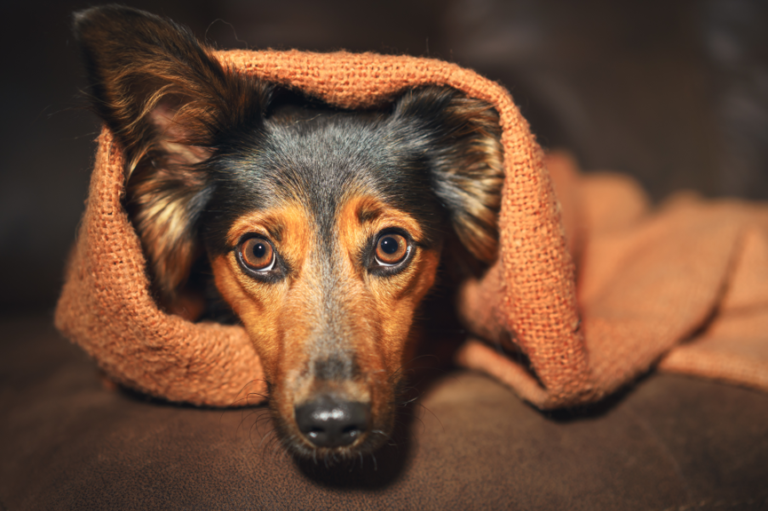
Anxiety is the feeling of worry, nervousness or unease caused by perceived dangers. Almost 80% of UK pets are reported to suffer with episodes of anxiety* which can bring about unwanted behaviors in your dog or cat.
There are a number of causes of anxiety in your pet but the most common causes include;
There are a number of symptoms that pets display when stressed or anxious so look out for the following:-
In Dogs;
In Cats:
The first thing to do if your pet is showing signs of stress and anxiety is to work out what is causing it and address it, if possible. For example, if the stimulus is outside like fireworks, close the curtains and turn on the television or radio. Try to distract your dog or cat.
If the situation causing the anxiety is unavoidable, tips to try include:

Our veterinary nurses can offer lots of advice for reducing your dog or cat’s anxiety. If your pet suffers chronic anxiety, gets stressed about a specific issue such as being left alone, unavoidable loud noises or the cause is not immediately obvious, do get in touch.
If you are worried about anxiety in your pet or any have any other concerns please contact us.
St Kitts Veterinary Centre: 01252 844044
Basingstoke Veterinary Centre: 01256 844944
Crookham Park Veterinary Centre: 01252 913990
Firgrove Veterinary Centre: 01252 877799
* 2018 PDSA Animal Wellbeing Report

Ticks aren’t just unpleasant, they are potentially very harmful – especially if they go unnoticed. So it’s important that pet owners know what to look for and what to do if a tick is found on a pet.
Ticks are small, parasitic, spider-like creatures. They are very common, especially throughout the warmer months and they feed by latching onto a host’s skin in order to suck blood.
This becomes dangerous to pets and people because ticks can carry disease. They vary in colour and size and can easily be mistaken for a small skin lump but if you look closely, you should be able to see their legs.
There are a number of effective preventative treatments that either kill or repel the tick once they attach. Your vet can offer advice on the best treatment. As well as this, it’s advisable to make a habit of regularly checking over your pet.
Ticks are commonly found in woodland or moorland areas, especially in long grass. If ticks become a problem, it may be advisable to avoid walking your dog in these areas or try to stick to paths.
Ticks can carry Lyme Disease (Borreliosis) and they can pass this on to both animals and humans, so it’s really important that ticks are removed from your pet as soon as possible.
Special tick tweezers are available but they need to be used carefully, according to the instructions. It is important that the whole tick is removed so don’t crush the tick’s body or try to burn it off! Using Vaseline can make the tick drop off but unless you see it happen, the tick could just reattach.
Once you have removed the tick from your cat or dog, cleanse the area and keep an eye out for symptoms of illness.
If you are in any doubt, speak to your vet. Our veterinary nurses are able to remove ticks as well as provide advice on preventative treatment. Don’t forget that our Pet Health Care Plan (Plus) includes tick treatment.
Ticks are known to carry Lyme Disease. This is a bacterial infection that is still fairly rare in the UK but cases are on the rise. If your pet has been bitten by a tick, symptoms to watch out for include:
If you are concerned about the health of your pet or would like any further advice regarding ticks, please contact us.
St Kitts Veterinary Centre: 01252 844044
Basingstoke Veterinary Centre: 01256 844944
Crookham Park Veterinary Centre: 01252 913990
Firgrove Veterinary Centre: 01252 877799
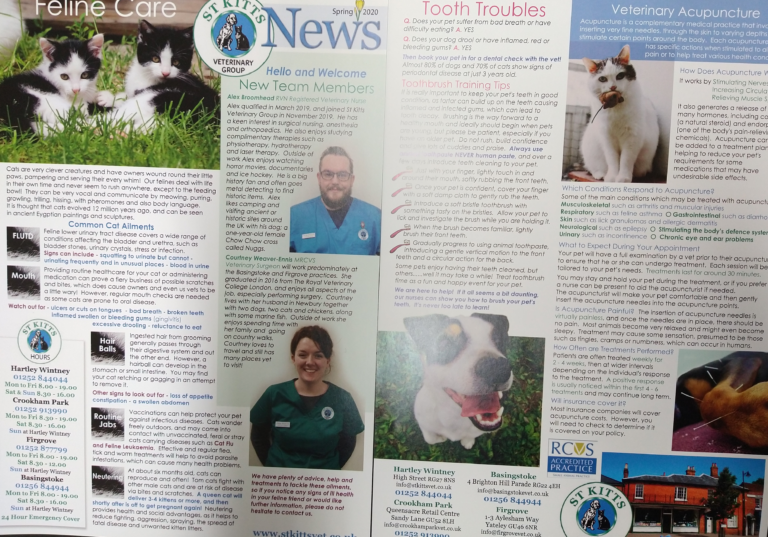
For all the latest practice news and health information, check out our newsletter in the link below!
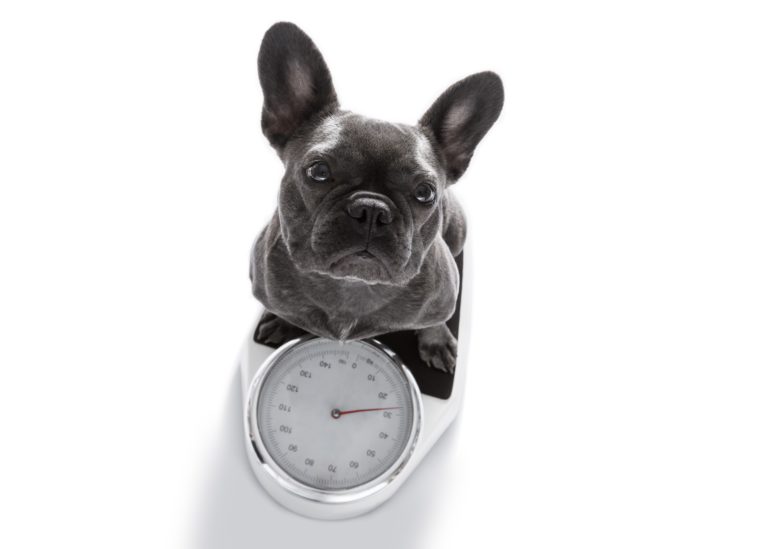
The number of overweight pets is unfortunately growing in the UK. If left unchecked, what started as a bit of excess weight can lead to obesity which brings with it some very serious health issues for your pet including diabetes, heart disease and cancer.
It is therefore important to keep an eye on your pet’s weight and if you think they may be overweight, address it straight away. This will help ensure that your pet enjoys a long, happy and healthy life.
There are a number of checks you can use to establish whether your pet is overweight.
1. You should be able to see and feel the outline of your pet’s ribs and be able to feel your cat and rabbit’s spine and hip bones too. They should feel rounded though, not sharp which would indicate an underweight animal.
2. Your dog or cat’s waist should be clearly visible from above although if it’s a long haired breed, this may be more difficult.
3. A dog’s belly should be tucked up when viewed from the side and a cat’s shouldn’t be sagging down.
Measure portions – Check that you are feeding your pet the correct portion size. Follow advice on the food packaging regarding size, age and lifestyle. If your pet is on the chubby side, give them slightly less until they are looking slimmer.
Get them moving more – Increase the length of your dogs walk or add another walk to your usual routine. Even a few more minutes playing in the park can help burn calories. It’s not just kittens that are playful, older cats can be encouraged to play and a couple of 10-15 minute play sessions with your cat can help with weight issues.
Manage treats – Keep an eye on the type of treats your pet is given. Human food given as treats can cause your pet to pile on the pounds so it’s better to stick to those specifically designed for animals, remembering to limit the number given.
Don’t assume they are hungry – Just because they look as though they are begging for your food, it doesn’t necessarily mean they want it. They may be after your attention so try a pat on the belly or scratch behind the ear instead of giving tidbits.
If you have concerns over whether your pet is a healthy weight, please get in touch. We can carry out a health check and recommend a weight reduction programme if necessary.
St Kitts Veterinary Centre: 01252 844044
Basingstoke Veterinary Centre: 01256 844944
Crookham Park Veterinary Centre: 01252 913990
Firgrove Veterinary Centre: 01252 877799
We are running a free, educational evening for our clients on Thursday 30th January 2020 at our Firgrove Veterinary Practice in Yateley. Come and join us for an evening of simple, powerful advice on weight management for your pet, delivered by people who care and aren’t going to pass judgement. We look forward to seeing you there!
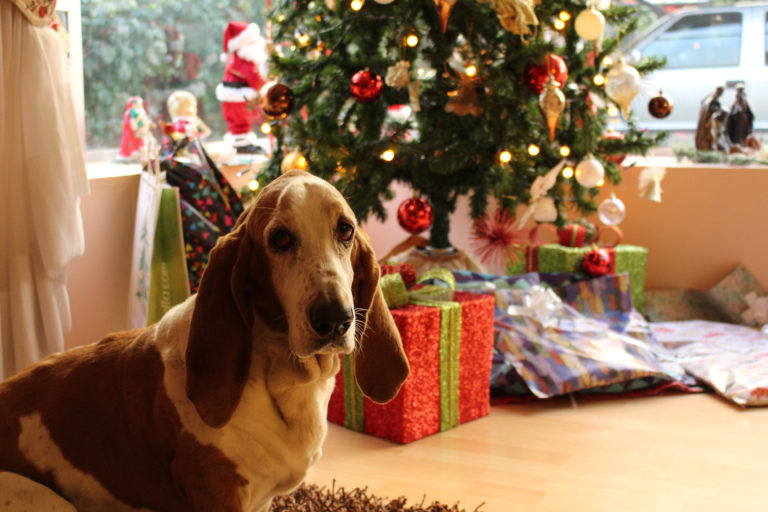
For many of us Christmas is a busy and exciting time of year! However for your pet, the festive period can be fraught with potential dangers to their health and wellbeing.
Reduce the risk of an emergency trip to the vet and ensure the whole family has a very merry Christmas by taking note of the advice below.
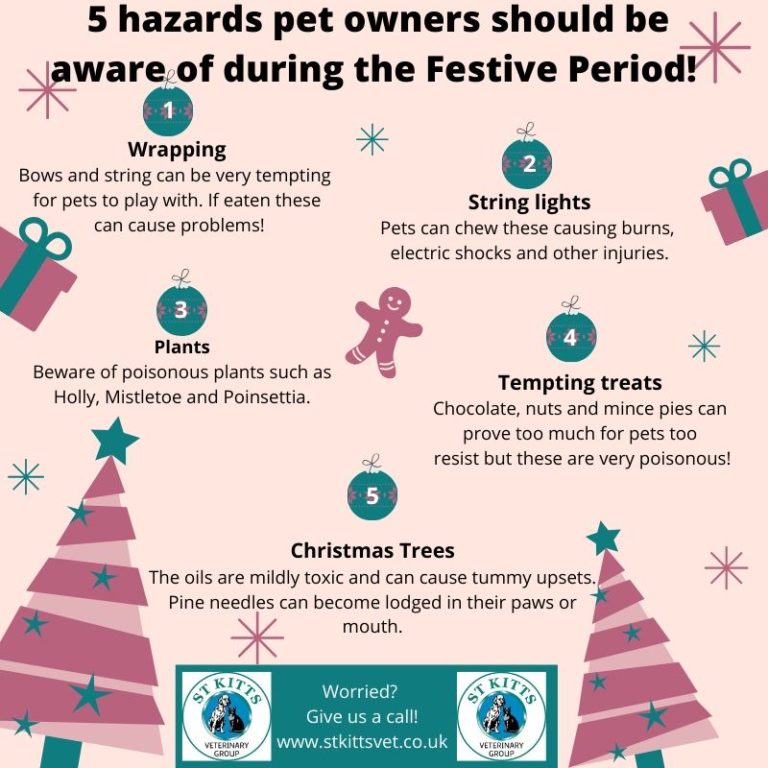
1. Real Trees
The oils found in fur trees are mildly toxic to pets and can cause a tummy upset if ingested. The needles can easily become lodged in a paw or throat so make sure fallen needles are cleared up promptly and ensure pets aren’t left unsupervised near the tree.
2. Decorations & Lights
Rabbits, cats and dogs have all been known to chew through wires so make sure your cables are tucked away safely. Baubles can look just like toys to pets! They may want to play with them – resulting in broken glass and potential damage to paws, chew them or even eat them which can often mean a visit to the vet. Also, ensure any chocolate tree decorations are out of reach!
3. Dangerous Foods
4. Poisonous Floral Decorations
Poinsettia, Mistletoe, Amaryllis and Holly are Christmas favourites but they are dangerous for pets. With varying levels of toxicity, the side effects depend on how much of the plant is consumed. Display them well out of reach to avoid any tummy troubles.
5. Keep Pets Happy
Christmas time often means a busy home, with friends and family coming together to celebrate. Unfamiliar people and more noise can be frightening for your pet so it’s a good idea to provide them with a safe room where they can escape and feel at ease if it all becomes too much. Pheromone diffusers can often provide comfort in these circumstances.
It’s really important to maintain your pet’s normal routines, especially with feeding and exercise. This can be helpful in ensuring that they don’t become too unsettled and are able to enjoy the festive season too!
If you need any advice during the Festive period, please call us on:
St Kitts Veterinary Centre: 01252 844044
Basingstoke Veterinary Centre: 01256 844944
Crookham Park Veterinary Centre: 01252 913990
Firgrove Veterinary Centre: 01252 877799
Opening times:
Monday 23rd – Normal Opening Hours
Tuesday 24th – 6pm Close
Wednesday 25th – Vets Now Farnham 01252 737555
Thursday 26th – Vets Now Farnham 01252 737555
Friday 27th – Monday 30th December – Normal Opening Hours
Tuesday 31st – 6pm Close
Wednesday 1st January – Vets Now Farnham 01252 737555
Thursday 2nd January – Normal Opening Hours

Come and join us for a free evening of simple, powerful advice on weight management for your pet. Delivered by people who care and aren’t judging.
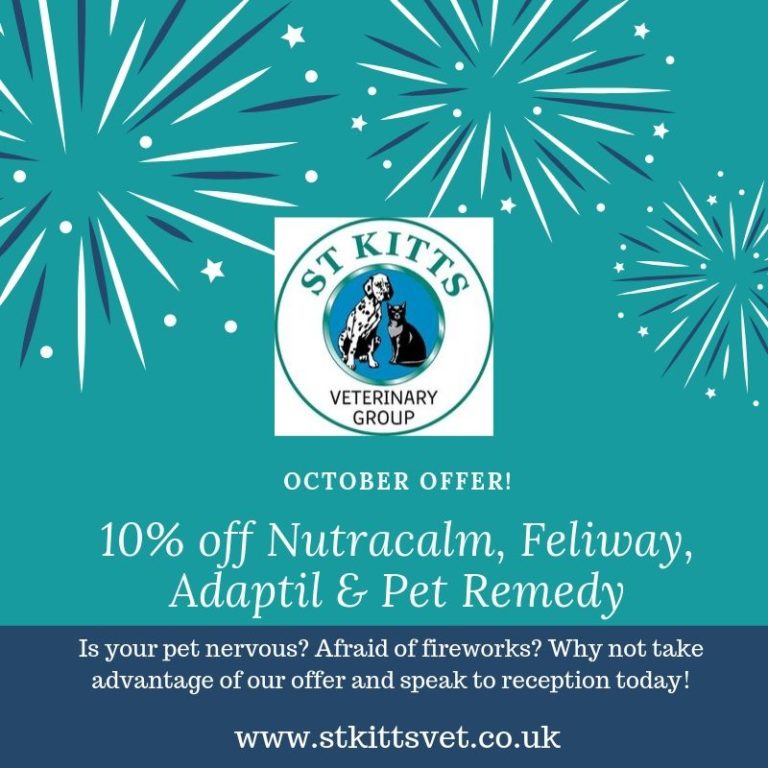
This October we are offering you 10% off all Nutravet, Feliway, Adaptil and Pet Remendy products.
With firework season coming up why not take up our offer?


