
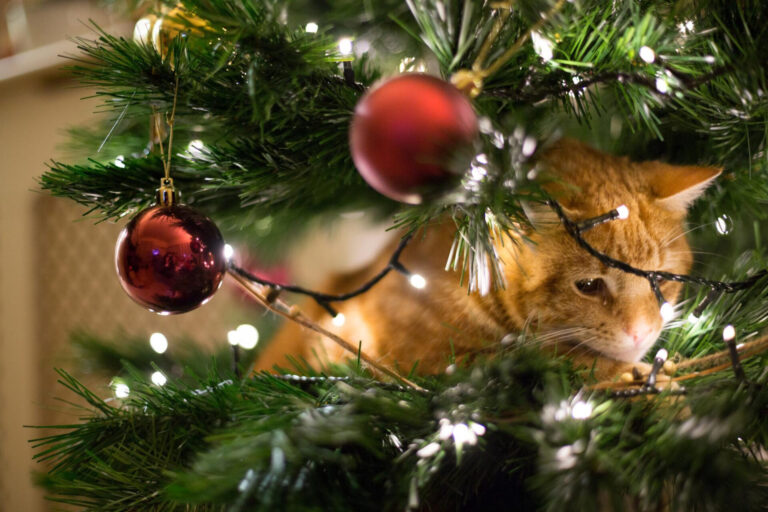
The festive season brings plenty of excitement – sparkling decorations, seasonal treats and a cosy atmosphere we all enjoy. But for our pets, these changes can introduce unfamiliar sights, smells and potential hazards. That’s why it’s so important to pet-proof your home for Christmas, ensuring your celebrations remain safe and stress-free.
Whether you share your home with a cat, dog, rabbit, reptile, bird or small furry friend, a little preparation can make a big difference. Check out some of the top tips from our team below.
Festive decorations can be fascinating to pets of all kinds. To minimise risks:
For small pets like rabbits or guinea pigs, ensure decorations and wires are kept well out of nibbling range. Birds should also be supervised around trees and tinsel, as shiny objects can be particularly enticing.
Many festive plants, including holly, ivy, poinsettias, lillies and mistletoe, can be harmful to a wide range of pets if ingested. If you’re unsure whether a plant is safe, it’s best to keep it out of reach or opt for artificial alternatives.
If you suspect your pet has eaten something potentially toxic, please contact us promptly.
Many traditional Christmas foods are unsuitable and dangerous for pets, including:
This applies to all pets, including rabbits, birds and reptiles, who each have specific dietary needs. Keep festive treats well out of reach and ensure visitors understand not to feed pets without guidance.
If you’d like to treat your pet to some festive bits, the RSPCA has some great recipes for homemade treats, for both cats and dogs.
Batteries are a common sight over the festive season, especially with new toys, decorations and gadgets around the house – but they can be extremely dangerous if a pet gets hold of one. Whether it’s a loose battery or one inside a toy, chewing or swallowing can cause severe internal burns and life-threatening injuries in a very short space of time.
To help keep pets safe, make sure spare batteries are stored securely, check that battery compartments on toys and decorations are firmly closed and dispose of used batteries promptly and safely. If you suspect your pet has chewed or swallowed a battery, contact us immediately for advice.
The noise and activity of Christmas can be stressful for pets, especially those sensitive to change, such as small mammals or birds. To help, you can:
Fairy lights, candles and heaters all help create a warm and festive atmosphere, but they can pose risks to pets if not used carefully. Avoid leaving candles or open flames unattended, and keep electrical cables secured and out of reach to prevent chewing.
If you’re using heaters or have a fireplace, ensure they’re safely guarded and monitored, particularly around curious pets. For birds, it’s best to take extra care with scented candles and diffusers, as certain fragrances and aerosols can be harmful to their sensitive respiratory systems.
Items such as ribbons, bows and string can cause problems if chewed or swallowed. Keep wrapping supplies stored safely away from curious pets, and check gifts under the tree for anything loose that might be investigated.
For pets that roam freely, consider using more robust wrapping materials that are less likely to tear or reveal tempting textures.
If you’re planning to travel or arrange boarding over Christmas, it’s worth taking a little time to make sure your pet is fully prepared. Things to consider include:
With a few simple precautions, you can enjoy a festive home that’s safe for every member of the family – pets included. If you need advice or have concerns about your pet’s health or wellbeing, the St Kitts team is here to help. Get in touch with your local practice:
St Kitts Vets Hartley Wintney: 01252 844044
St Kitts Vets Basingstoke: 01256 844944
Crookham Park Veterinary Centre: 01252 913990
Firgrove Veterinary Centre: 01252 877799

Over the Christmas period, we all like to tuck into some festive treats and it can be hard to say no to the puppy eyes and pawing at your leg from pets who are desperate to have a taste for themselves. However, while dinners with all the trimmings will go down a hit with us humans, there are a number of items that can be harmful to our pets.
To guide you through a safe and merry Christmas with your pets, we’ve put together a list of foods that may not agree with our pets’ digestive systems and should therefore be kept out of paw’s reach.
The caffeine found in everyday items such as coffee beans, tea bags and fizzy drinks can cause your pets harm. It’s important to keep them stored securely to avoid causing heart palpitations, rapid breathing and restlessness.
Be mindful of everyone’s festive favourite – chocolate – as the stimulant Theobromine found in this is poisonous to your pet. It can affect their digestive, heart and central nervous systems, causing symptoms such as vomiting, diarrhoea, restlessness, hyperactivity and seizures. In some cases, these effects can be fatal.
It’s common to want to share the odd tidbit with your pet while you’re cooking, but bones can be a big hazard, as they’re prone to splitting and can sometimes scratch or get lodged into your pet’s throat, as well as fracture their teeth.
Salmonella may also be present in raw bones, which is equally as dangerous and can cause vomiting, diarrhoea, abdominal pain, loss of appetite, lethargy and fevers. It’s best not to share bones, particularly raw ones, to avoid any complications.
Large chunks of corn on the cob can be hard for your pet to digest and may cause serious blockages that often require emergency surgery. Symptoms to watch out for include vomiting, loss of appetite, constipation or diarrhoea and stomach ache.
Most pets will find it difficult to properly digest the lactose in milk and cheese products, so it’s safer if you avoid giving them dairy altogether. In some cases, dairy can cause vomiting, diarrhoea and potential skin allergies.
Particular types of blue cheese, such as Roquefort, produced using a fungus that pets are commonly sensitive to. In extreme circumstances, animals can quickly develop muscle tremors and seizures.
Fortunately, there are plenty of pet-friendly alternatives you can try for a healthy and balanced diet, without the risk of digestive issues or allergic reactions associated with dairy consumption.
Although small in size, fruits like grapes, raisins and sultanas are toxic and can cause diarrhoea, vomiting, lethargy and dehydration. In serious cases, these symptoms can lead to kidney failure, which is often fatal. Common festive treats like mince pies, stollen and Christmas pudding should be kept safely away, as they’re packed with these fruits.
In general, it’s not advisable to give your pet any nuts, but this is especially important with macadamia nuts, as they are the most toxic. It can take just 12 hours after ingestion for the symptoms to appear, which include weakness, depression, tremors, vomiting and increased body temperature. Effects can sometimes be fatal.
Nutmeg is often used to add spice to festive treats but it’s highly poisonous to pets. Symptoms to be aware of are tremors and seizures.
Pigs in blankets tend to be a staple in UK homes over Christmas – and with good reason for us humans! However, because of the fat and salt content, you should avoid slipping one or two to your pets at the dinner table. When eaten, foods like this can cause digestive issues including pancreatitis, where the pancreas becomes inflamed. Keep an eye out for vomiting, loss of appetite and abdominal pain, as these can be common symptoms.
Offering your pets fat trimmings, raw meat, raw eggs and raw fish should be avoided at all costs. Raw ingredients like this can cause salmonella, which may induce vomiting, diarrhoea and loss of appetite. For cats in particular, too much fat can lead to pancreatitis.
Common types of stuffing – including sage and onion – contain a number of ingredients that can be dangerous to pets. Things like onions, garlic, leeks, shallots and chives (those that belong to the allium family) contain a substance that causes damage to the red blood cells of pets and can lead to life-threatening anaemia. Signs that your pet may have ingested these items include tiredness and lethargy.
The artificial sweetener, Xylitol (which is found in many sugar-free sweets, cakes, gum and diet foods) can trigger a sudden release of insulin in cats and dogs. This may cause seizures and damage to their livers. Be on the look out for signs such as vomiting, weakness and lack of coordination.
Fermented yeast dough can produce alcohol which is toxic to your pet. Common symptoms to watch out for include bloating, excess gas and constipation.
Just because there are particular foods that your pet should steer clear, it doesn’t mean they can’t join in the festivities! Instead, why not treat them to some delicious cat and dog friendly treats that they’ll love just as much.
If you have concerns about your pet’s health, contact your local St Kitts practice immediately:
St Kitts Vets Hartley Wintney: 01252 844044
St Kitts Vets Basingstoke: 01256 844944
Crookham Park Veterinary Centre: 01252 913990
Firgrove Veterinary Centre: 01252 877799
